
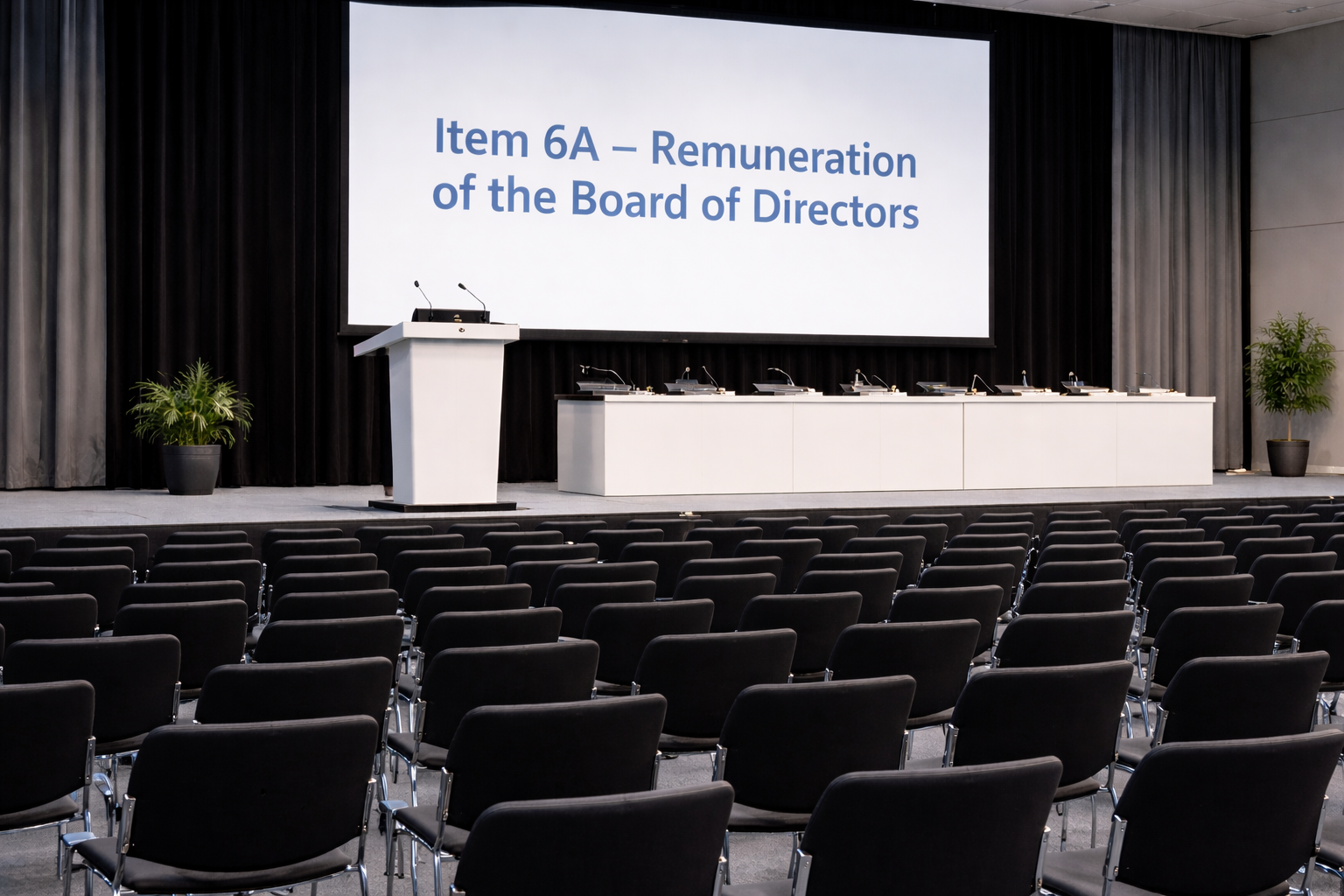
Why are the remunerations of the board of directors and executive management in Switzerland consistently approved by the general meeting of shareholders with a clear majority?
AGM season is currently in full swing, with “say on pay” high on the agenda. A look at practice reveals a remarkably stable picture: In Switzerland, the respective remuneration proposals are generally approved without difficulty, often achieving very high approval rates.
How can we explain this?
One key factor is the comparatively restrained remuneration culture. By international standards, there are hardly any excesses in Switzerland when it comes to the remuneration of the members of the board of directors and executive management. Remuneration levels generally remain within a range that shareholders perceive as appropriate and understandable. Admittedly, this is also due to Switzerland’s comparatively stringent remuneration regulation: In the system of the Swiss corporation with listed shares, the general meeting has the power to reject a remuneration proposal in a binding manner (art. 735 CO). This preventive effect of the remuneration regulation should not be underestimated.
Another important factor is the high level of transparency. Statutory requirements, particularly those relating to remuneration reports, provide clarity on the structure, level and composition of remuneration. This transparency strengthens shareholder trust and reduces the risk of surprises at the general meeting.
A further point is the close alignment between performance and remuneration. The sound design of the remuneration system is more important than the absolute level of remuneration. Boards of directors that function well, with independent compensation committees, develop packages that are market-based, performance-oriented and objectively defensible. Variable remuneration components are typically linked to clearly defined, often long-term, targets. This ensures that the interests of executive management, the board of directors and shareholders are largely aligned.
Finally, the institutional shareholder structure of Swiss corporations also plays a role. Institutional investors and other major shareholders carefully analyse remuneration systems in advance and engage with the company at an early stage if necessary. Open conflicts at the general meeting are therefore the exception rather than the rule.
For larger shareholders, it is also not decisive whether the CEO earns, e.g., CHF 2.8 million or only CHF 1.5 million. It is simply a non-issue. What matters is that the company is well positioned and has a sound strategy. Therefore, the ability to influence strategy is significantly more important than voting rights related to remuneration.
The result: high approval, only occasional dissent.
Switzerland’s “say-on-pay” practice is effective not least because it is based on a combination of moderate remuneration, transparency and an effective shareholder dialogue.